
San Francisco Previous Residents by Era
San Francisco previous residents appear in layers. PIM fixes the parcel. The assessment roll supplies an ownership lead, recorded instruments connect transfer parties, and directories and census schedules restore listed adults and households. Permits, water taps, Sanborn maps, and Edwards Abstract date a structure when names or addresses shift. Obituaries and probate can close a life or heir trail. The table pairs each era with the place to seek it.
| Source | Years It Covers | Where Held | What It Shows |
|---|---|---|---|
| PIM | Current parcel search | San Francisco Planning map | Canonical situs, block/lot, APN, parcel history, permits, complaints, and historic context |
| Assessment roll | 1914-present | Assessor-Recorder counter or paid data | Current owner, assessed values, exemptions, and mailing address |
| Recorder Public Index | 1990-present | Assessor-Recorder online index | Grantor/grantee, recording date, document number, APN, and legal description |
| Older deed indexes | Sampled 1850-1905 and Mar-Apr 1913; gaps | City Hall Room 190 terminals, SFPL microfilm, and deed books | Earlier title parties, book/page citations, and recorded instruments |
| Building permits | 1906-present | DBI inquiry, PIM, and DataSF | Construction or alteration dates, applicants, contractors, and inspections |
| Spring Valley water taps | 1861-1930s | SF History Center microfilm and online material | Connection date and an owner, contractor, or developer clue |
| Sanborn maps | 1886-1991 | SF History Center and licensed digital collections | Building footprint, use, and address evolution |
| Edwards Abstract | Dec 1899-1977, incomplete | SF History Center | Deeds, permits, sales, owners, contractors, architects, and cost |
| City and reverse directories | 1850-1982 online; reverse 1953-current | SFPL M&N Center and digital pages | Names, street numbers, listed adults, and household clues |
| Street lists and 1940 House and Street Directory | 1933, 1936, and 1940 | SF History Center print, microfilm, online | Address-to-occupant leads before regular reverse directories |
| Census schedules | 1852 state; federal through 1950 | SFPL, NARA, and library databases | Decennial households, relationships, ages, and occupations |
| Obituaries and probate | Varies by collection | SFPL newspapers and Superior Court Probate | Death, survivors, heirs, and an end point for a past-resident trail |
Start with the newest key. A deed party may lead to an earlier seller, while a directory entry may name someone who never held title. Pair two records. Publisher gaps and volume details are on the San Francisco city directory collections; the backward trail stays tied to the parcel.
Begin With San Francisco Block-Lot
Addresses change. The Property Information Map, or PIM, matches an address, parcel, or planning application number and allows a map selection. Save the matched canonical situs, assessor block/lot, and Assessor Parcel Number, or APN. Its tabs cover property, zoning, environmental, historic preservation, planning applications, permits, complaints, appeals, and maps. That parcel key survives street wording.
PIM is not an owner-name directory. Its Assessor Summary identifies the parcel, but current ownership comes from the assessment roll, counter, or paid data. A record may show owner, values, exemptions, and mailing address. Mailing address can differ from situs and is only a contact clue, not residence proof.
Keep the parcel key. Block/lot and APN link PIM to recorded documents when a San Francisco street name changes. Preserve the original address spelling beside the modern situs.
Walk the San Francisco Deed Chain
Assessment gives a lead; the San Francisco County deed chain moves through the Recorder Public Index. Follow one instrument to the earlier instrument that put the seller in title. Use APN and legal description, since a name-only match can join unrelated parcels.
- Enter the address in PIM. Copy the canonical situs, block/lot, and APN.
- Get the current owner from the roll, counter, or data. Search that name as grantee in the Recorder Public Index.
- Open the likely purchase deed. Record grantor, grantee, date, document number, APN, legal description, type, and pages.
- Search that grantor as an earlier grantee. Repeat the seller-as-earlier-grantee loop backward.
- Before 1990, use Room 190 terminals, microfilm or microfiche, SFPL grantor/grantee film, and deed books. Note gaps.
- Keep owner chronology apart from occupant chronology. Deeds name transfer parties, not every resident.
The San Francisco Recorder Public Index shows party role, date, document number, APN, and copy link. A full copy may add return or tax address, legal description, consideration, signatures, notarization, and stamp. It still is not a household roster.
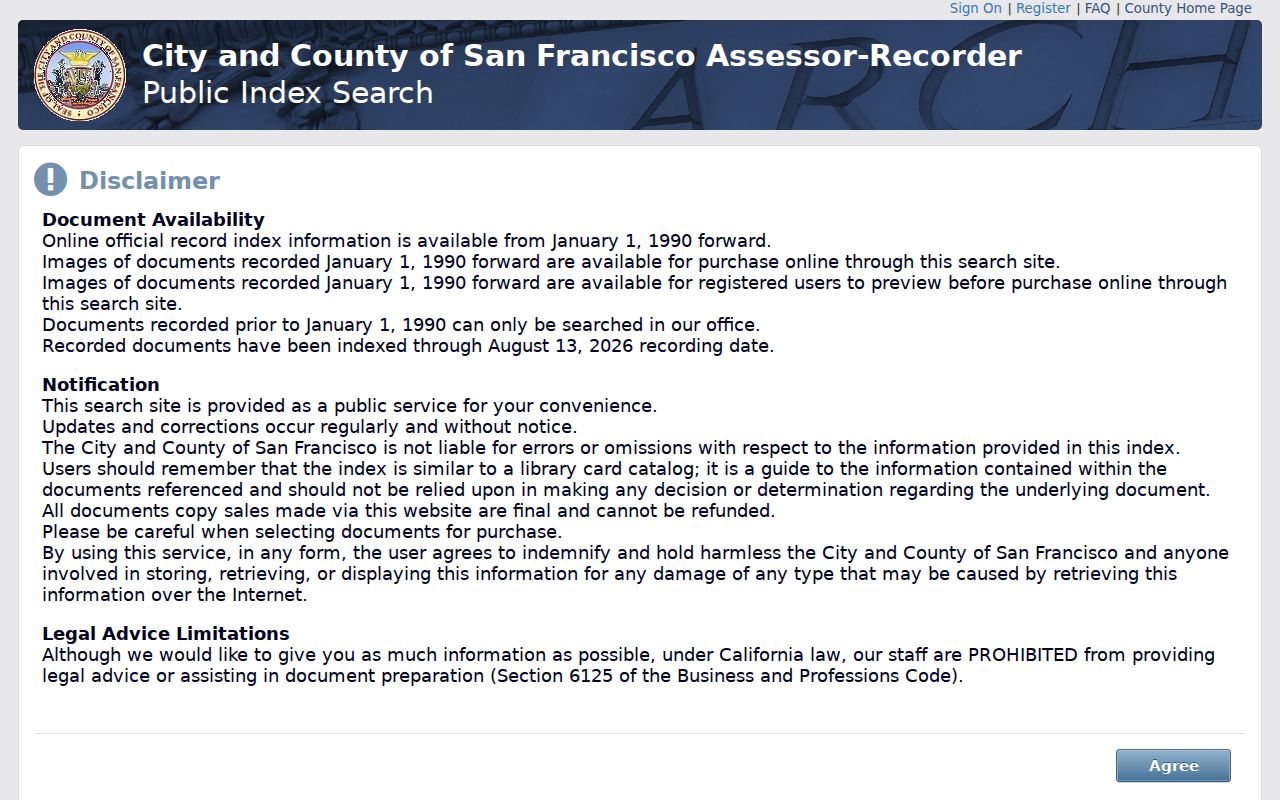
The index view keeps party role, date, document number, APN, and copy access together. Preserve those fields before moving to the next seller.
Cross San Francisco's 1990 Boundary
The online Recorder Public Index starts in 1990; the office reports 7 million+ digitized records. That boundary limits a negative web result. Room 190 terminals, microfilm, microfiche, deed books, and SFPL film reach earlier years.
Sampled indexes cover 1850-1905 and Mar-Apr 1913, with gaps. Bring spellings, date, APN or legal description, and book/page. For a known document, the Recorder mail request form records date, number, reel/image, copy count, and certification. Check the form for current fees.
SFPL's house-history research route joins maps, directories, permits, newspapers, and finding aids when the web index ends.
The San Francisco house-history guide shows the library fallback for a previous-residents search.
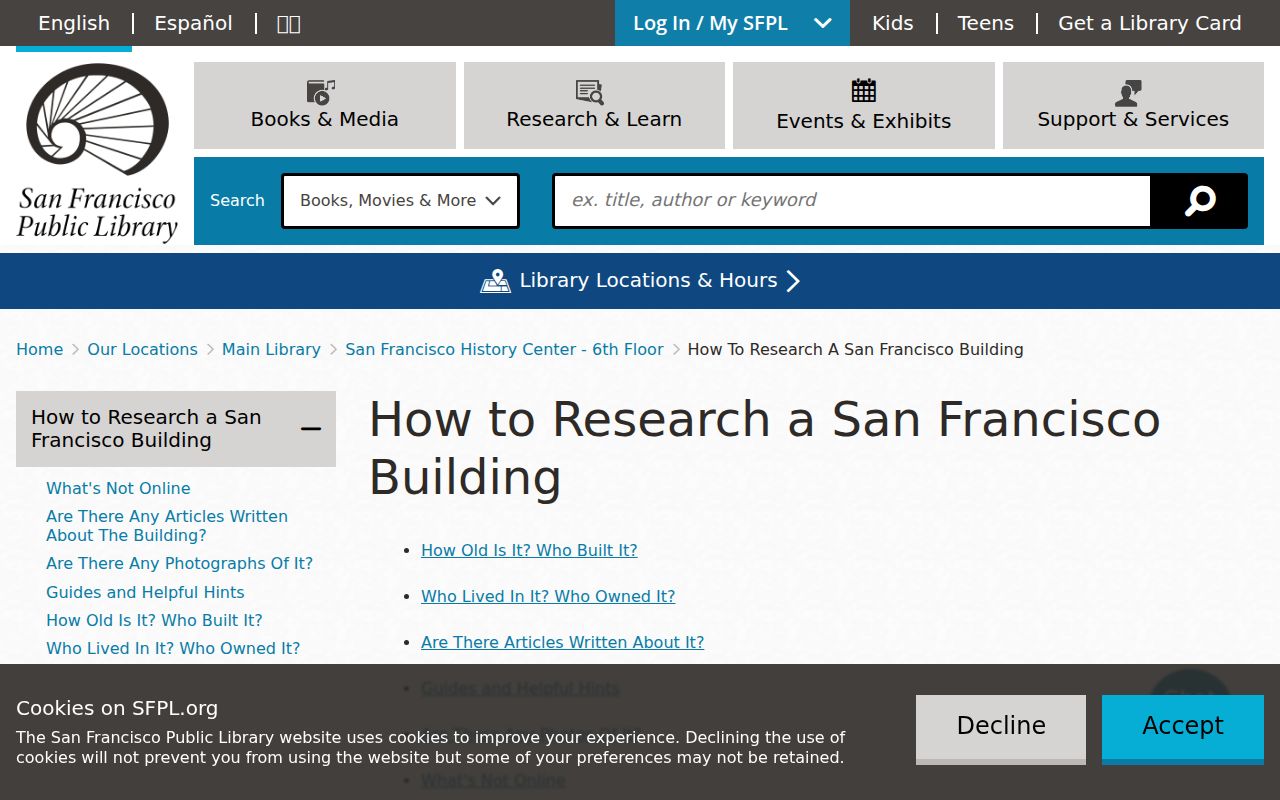
The house-history guide points toward local collections that can bridge a pre-1990 deed gap.
Pair San Francisco Directories and Census
Deeds identify title parties. Directories and census schedules bring past residents into view. San Francisco city directories run 1850-1982 online, with print and microform too. Reverse access starts in 1953; earlier tools are the 1933 and 1936 street lists, the 1940 House and Street Directory, January and October 1906 block books, voter registers, and census. The 1890 federal loss makes pairing important.
- Choose a year tied to a deed, permit, vital event, or move. Normalize the historic street and number.
- Copy the exact name, initials, spouse or widow notation, address, and occupation abbreviation. Check adjacent years.
- From 1953 test the reverse section by address. Earlier, compare the 1933 or 1936 list and 1940 directory with a block book or voter register.
- At a census year, record enumeration district, household members, relationships, ages, and address.
- For a disappearance, check newspapers, obituaries, probate, renaming, number change, omission, move, or death.
Directories list principal adults or subscribers, not every household member. Census adds relationships and ages, but an address may not match a current parcel. The 1949 Chinese Directory and community papers can correct a spelling or name order.
Note: A missing directory year may reflect publisher omission, a move, a death, or a street-name change.
Separate San Francisco Owners and Occupants
Name the record role each time. An assessment roll is an ownership lead. A deed is a transfer. A directory lists a person at an address. A census is a decennial household snapshot. A permit names work tied to a parcel. A water tap names a connection. None alone proves someone lived there throughout.
- Situs and APN
- The situs is the parcel's address label. APN means Assessor Parcel Number, commonly carried with the block/lot to connect maps and records.
- Grantor and grantee
- The grantor transfers an interest. The grantee receives it. The pair belongs to the instrument, not automatically the household.
- Chain of title
- A linked sequence of recorded transfers for one parcel, checked by names, dates, APN, and legal description.
- Legal description
- The deed's formal land description. It can identify a parcel after a street address changes.
- Criss-cross directory
- An address-first directory that turns a street number into a listed name instead of starting with an alphabetical entry.
- Enumeration district
- A census area used by the enumerator. It locates a household in the schedule, not a modern parcel.
Mailing addresses, permit contacts, and water-record names need a second source. DMV and utility-customer addresses are not public directory layers. Keep date and role beside each name. Call an occupant listed, counted, or reported, not a confirmed owner.
Date a San Francisco House
When a directory gap leaves a date unclear, San Francisco house-history sources add physical evidence. DBI permits run 1906-present. Sanborn maps run 1886-1991 and show footprint, use, and address change. Edwards Abstract runs Dec 1899-1977, incomplete, with deed, permit, sale, owner, contractor, architect, and cost notes. PIM Historic Preservation may link 1976 surveys and photos.
Spring Valley Water Company taps run 1861-1930s and are address-alphabetized. They can name an owner, contractor, or developer. The date may mark construction, first occupancy, or service to an older structure.
The SFPL building-age guide shows how these sources fit together. It is a path to permits, taps, Sanborn maps, and surveys, not a deed or occupant record.
The building-age research page illustrates the evidence used to date a San Francisco house.
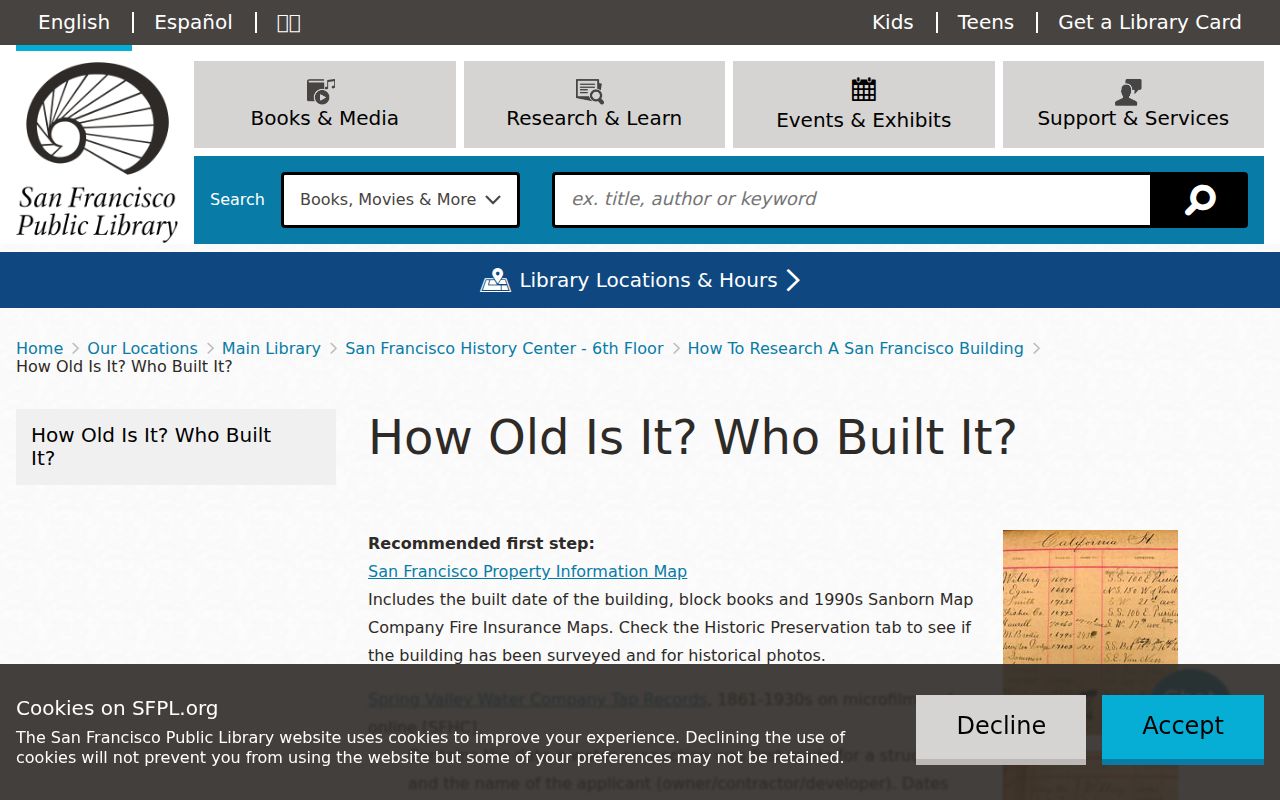
The building-age view shows why a date needs a label. A tap, permit, map, and deed can describe different moments in one parcel's history.
Close a San Francisco Previous Residents Trail
Bayview and Hunters Point passed through numbered/lettered, geographic, South-suffix, and December 1909 pioneer and famous-person names. Railroad Avenue became 3rd Street between about 1915 and 1924. A modern street search can miss a prior name; use block/lot, legal description, Sanborn maps, and original spelling.
San Francisco was one of California's original 27 counties in 1850. Consolidation in 1856 moved much southern territory to San Mateo County, so an 1850s county record may concern land outside today's line. Record the contemporaneous street, jurisdiction, and date.
When a listed occupant disappears, use the SF History Center newspapers and obituaries: Chronicle 1865 onward, Examiner 1865-2007. Obituary help allows ten names per patron monthly, with no guaranteed match. Probate is Superior Court, not County Clerk. Its 1987-present name index and eligible estate or trust images from 2001-present can identify heirs and filing-time addresses. A later deed may show distribution, not current location.
Cross obituary or probate with a directory, census, deed, or cemetery record. That check separates a family notice from a certified vital record and supports careful house, family, or heir history.
Lawful personal use. San Francisco previous-resident research belongs to house history, family history, reunion, heir work, and personal curiosity. Never use a name, address, or record trail to stalk, harass, track, or harm a living person.