
San Francisco Resident Lookup Coverage
A San Francisco resident lookup should match the record to the question. The Assessor-Recorder roll may connect a person to title, values, exemptions and mailing versus situs addresses, where situs is the parcel’s official location. A deed names transfer parties, yet neither record proves occupancy.
| Record | What It Confirms | Where to Search | Access |
|---|---|---|---|
| Assessment roll | Owner, values, exemptions, mailing and situs | Assessor-Recorder counter or data | No verified free owner-name web search |
| Recorded deeds | Grantor, grantee, date, assessor parcel number (APN), legal description | Recorder Public Index | Metadata free; copies or images by request |
| Superior Court | Party, case type, chronology, disposition clues | San Francisco Superior Court | 1987 forward; category and image limits |
| Voter record | Own status, address, party and language | California My Voter Status | Authentication; files are purpose-limited |
| Vital record | Birth, death, marriage or divorce path | Local custodians or CDPH | Eligibility, copy type and fee control access |
| Fictitious-business-name (FBN), business, license | Registrant, entity, filing or credential affiliation | County Clerk, bizfile, DCA | Indexes free; products may cost |
| Permit record | Applicant, contractor, property chronology | Property Information Map or DBI inquiry | Summary public; full file by request |
| CIRIS or Megan’s Law | Custody or legally disclosable entry | California state portals | Disclaimers and use limits apply |
Start with the narrowest route. Resolve an address in the Planning Property Information Map, carry its block and lot to the Assessor-Recorder Public Index, and send name cases to the Superior Court service. Pair older clues with a second official record.
San Francisco Court Lookup, 1987 Forward
The San Francisco Superior Court online services route covers civil, family, probate and small-claims name searching from 1987 forward. It is local, not a statewide trial-court party search. The name query accepts lastname, lastname, firstname, or a company name. Choose the case family and save the case number.
Civil includes limited and unlimited cases; probate includes estates, trusts, guardianships and conservatorships. Family results may need a case number, while criminal and traffic matters are separate.
Read the register of actions, the court’s dated case log, before treating a name hit as proof.
| Result field | What it tells you |
|---|---|
| Case number and caption | Stable key and case title |
| Party names | Named persons or entities |
| Case type and filing date | Category and start date |
| Status and disposition | Open status and recorded ending |
| ROA event dates and descriptions | Filings, hearings and docket activity |
| Image or copy link | Eligible scan or order route |
Civil and probate estate or trust images generally begin in 2001; small-claims images begin in 2008. Family access is usually a register of actions with a case number and no images. Sealed, juvenile, adoption and confidential material stays unavailable. Public terminals may show more than the web. Local certification is $25, with copy or retrieval charges possible. PACER charges $0.10 per page, usually caps a document at $3, and waives a quarterly bill at $30 or less.
Note: Save the case number first because it is the reliable key for clerk requests and family-law register access.
San Francisco Same-Name Trap
Names collide in court, property, business and license indexes. Retain surname-first order, initials, former or married names, accent variants, multi-part Spanish surnames, and alternate Chinese romanizations or name order. Add a date window. In deeds, separate grantor from grantee; in court, compare co-parties and dates; in business records, use the entity number and filing timeline.
Two stable identifiers should agree before a result is carried forward. A middle name plus address, or an APN plus transfer date, is stronger than a city match. A spouse, co-party or organization can separate court and FBN records. If clues conflict, keep candidates open and return to the custodian.
San Francisco Vital Record Access
Vital records answer an event or relationship question. San Francisco Department of Public Health (DPH) handles current and prior-year births and deaths; the local Assessor-Recorder handles older local events and public marriages; the County Clerk holds confidential marriages. California Department of Public Health (CDPH) maintains statewide birth, death, fetal-death, marriage and divorce records from July 1905.
The CDPH application route sends copies by First Class Mail, with no public counter or expedition. Listed fees are $31 birth, $26 death, $19 public marriage and $18 divorce Certificate of Record. Certified copies take roughly four to six weeks; amendments take seven to nine weeks. Mail goes to CDPH-Vital Records, MS-5103, PO Box 997410, Sacramento, CA 95899-7410, or call 916-558-1784.
Health and Safety Code §103526 separates authorized certified copies from informational copies. Authorized requests use relationship rules and a sworn declaration, sometimes notarized by mail. Informational copies are marked not valid for identity. A public marriage differs from a confidential marriage, limited to the parties or court authority. A CDPH divorce certificate is not the Superior Court decree.
San Francisco Heir and Classmate Leads
One-person research can serve an heir or family question. Move from death evidence to an obituary, probate petition, notice, will, inventory or decree, then check a later deed for distribution. These records describe an estate at a point in time, not a current address. Birth-family research uses California’s authorized adoption information and contact procedures, not an open adoption name index.
A former classmate search begins with SFPL yearbooks, school histories, alumni material and newspapers. The SF History Center and Magazines and Newspapers Center hold yearbooks reaching into the nineteenth century and obituary help. Requests cover ten names per patron per month, with no guaranteed match. The San Francisco historical directory collections add a dated clue for later verification.
San Francisco Voter Record Limits
California My Voter Status authenticates the voter’s own record, not a public roll. It asks for first name, last name and birth date, then conditionally a California license or ID number or last four SSN digits. Results can show status, address, party, language, polling place and election information, never ballot choices.
A voter-file request is separate and purpose-limited under Elections Code §§2188 and 2194, Government Code §7924.000 and related regulations. Approved election, political, scholarly, journalistic or governmental purposes are required. A statewide file is $100; a specific request covers up to ten named voters at $30 each, capped at $100. Confidential voters, Safe at Home participants, preregistered minors and protected identifiers are excluded.
This is not a reverse lookup. A street set is not a specific-voter request. Wait 24 hours after online registration; inactive status is not proof of a move. Historical SF registers are separate.
Note: My Voter Status verifies the person who authenticates, not a neighbor who happens to know the name.
San Francisco Affiliation Records
Affiliation records describe what was filed. County Clerk FBN search accepts an FBN name or confirmation number, with file links and a copy cart. It can show a fictitious name, principal street address, registrants and filing dates. bizfile Business Search accepts a name or file number and shows entity, status, agent, address and filing details. An agent is not automatically an owner or resident.
The California Department of Consumer Affairs (DCA) License Search uses board, license type or number, business name, first name and last name, with city, county, status and discipline filters. The State Controller’s unclaimed-property search requires a last or business name or property ID, with first name, city and ZIP optional. A claim is a lead, not a current-location proof.
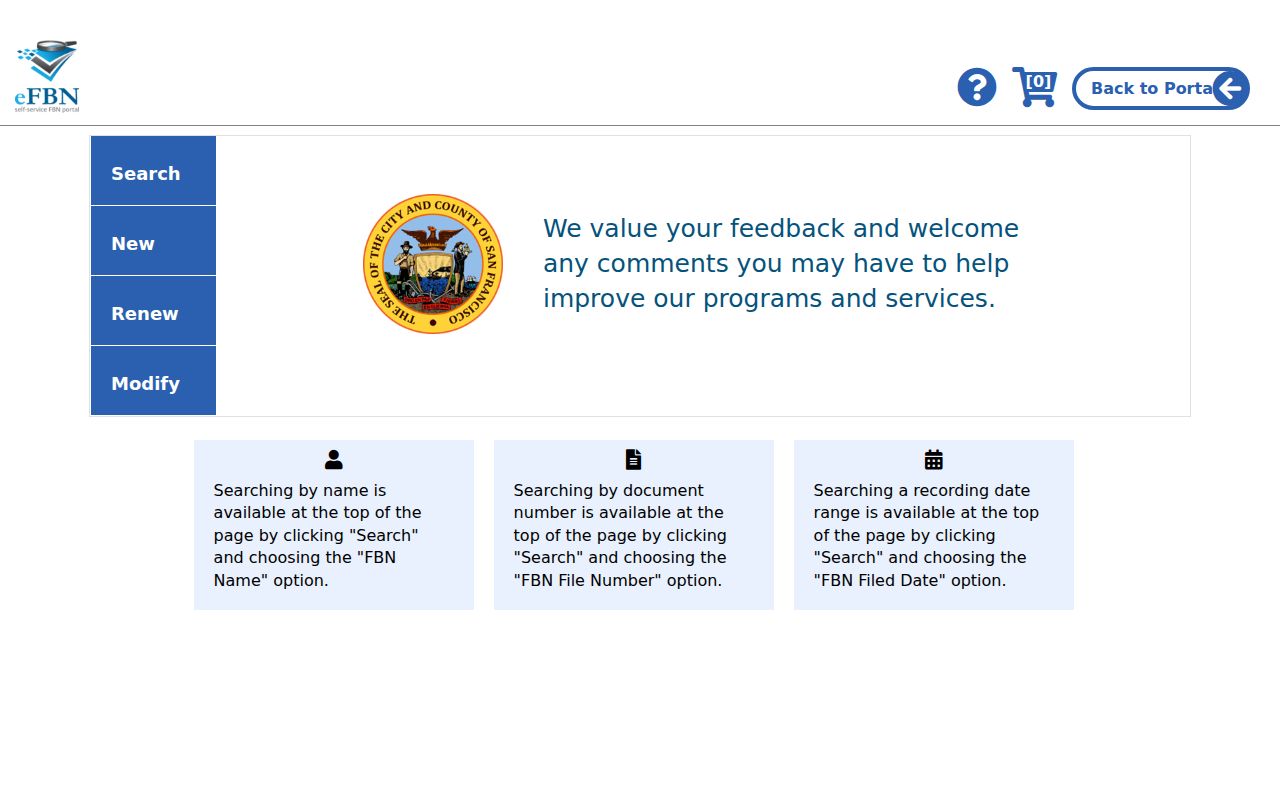
Use the registrant, principal-address and filing-date fields to separate a business filing from a personal address claim.
California Incarcerated Records and Information Search (CIRIS) searches by name or CDCR number. Megan’s Law offers legally disclosable name and map or address-area searches after its disclaimer. Both warn about omissions or mistaken identity, and neither replaces a court file.
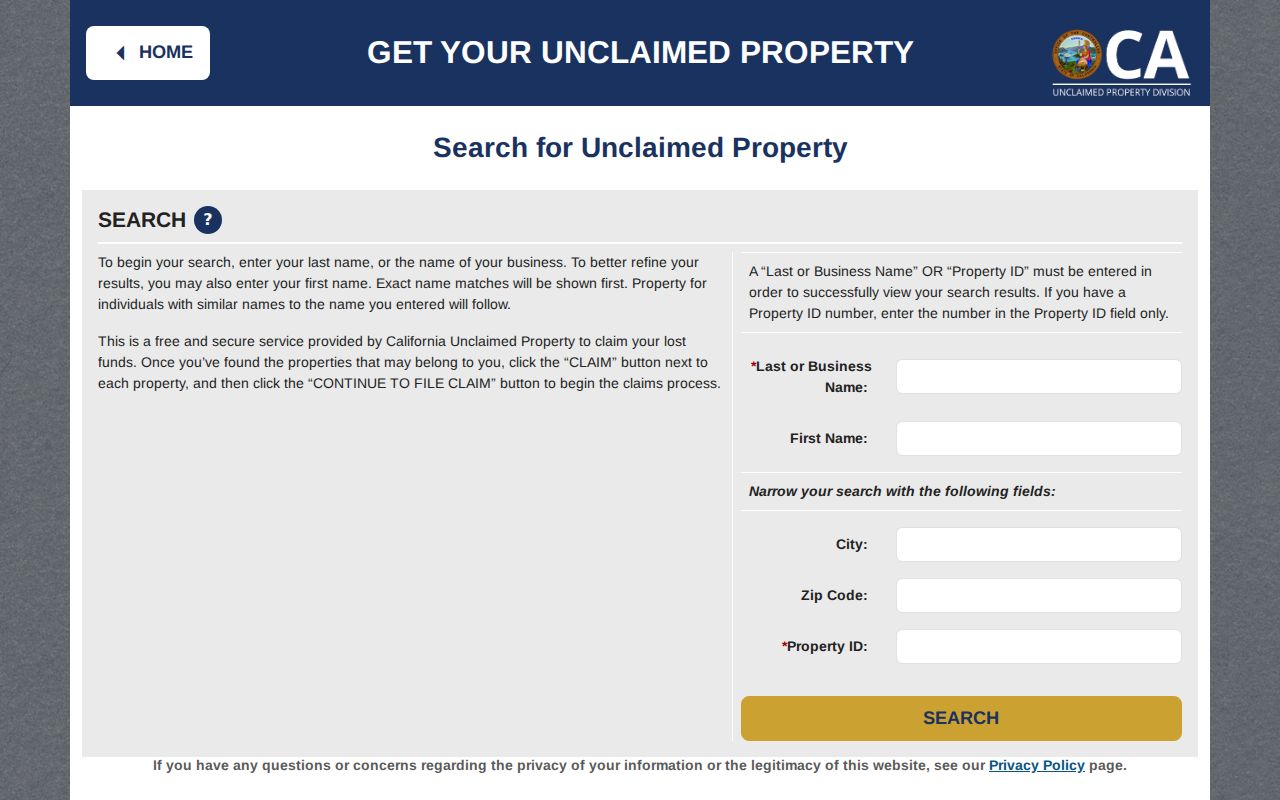
Compare the name, place and time with a second stable identifier.
Verifying a San Francisco Resident
Verification means convergence, not volume. The same name should connect to two stable identifiers and a record suited to the question. Keep owner, occupant, mailing address, situs and affiliation as separate labels.
- Normalize the name and note one date, address, APN, spouse, co-party or entity clue.
- Resolve an address in PIM, preserve the block and lot, and separate situs from mailing address.
- Run the court, vital or affiliation search with the exact name form and date range.
- Compare the case number, document number, APN, co-party, relationship or filing timeline with the second identifier.
- Order a certified copy only when needed, and send corrections to the source custodian.
- Docket
- The court’s dated case record and register of actions.
- Index versus image
- Searchable metadata versus an eligible scan or copy.
- Certified copy
- A custodian-attested copy supplied as official proof, subject to access rules and fee.
San Francisco CPRA Record Requests
When a web index stops, use the counter, mail route, library or focused request. The California Public Records Act, Government Code §7920.000 et seq., lets any person request existing records. Under §7922.535, an agency generally determines within 10 calendar days, with a written unusual-circumstances extension of no more than 14 days. Inspection is generally free; ordinary charges are direct duplication cost unless another statute sets a fee.
San Francisco’s public-records request portal can locate earlier requests or route a new one. Name the department, series, date range, address, APN, case or document number. Older deeds still use Room 190 terminals, microfilm and SFPL; court records use the clerk and terminals.
A CPRA request cannot create a resident profile. Ask for an existing permit, deed, index entry, docket item or file, then seek the correct custodian if the first office does not hold it.
Note: A focused request names an existing record, custodian, date range and format instead of asking for a person profile.
San Francisco Lookup Legal Limits
Public availability is not unrestricted use. Adoption, juvenile, sealed and confidential-marriage records have special rules; DMV data has separate limits. Safe at Home gives qualifying survivors and participants a substitute mailing address. Government Code §6208.1 restricts display after a proper demand, but does not erase every older source.
Broker deletion, court sealing, vital amendment, voter confidentiality and source correction are different remedies. Correct a wrong record with its custodian. The Safe at Home program is protection, not a public search feature.
Lawful personal use. Use a San Francisco resident lookup for family history, heir work, reunion research or civic record review. Do not use a record to stalk, harass, intimidate or publish identifying data to cause unwanted contact. California Penal Code §§646.9 and 653.2 can apply, and protected records must remain protected.